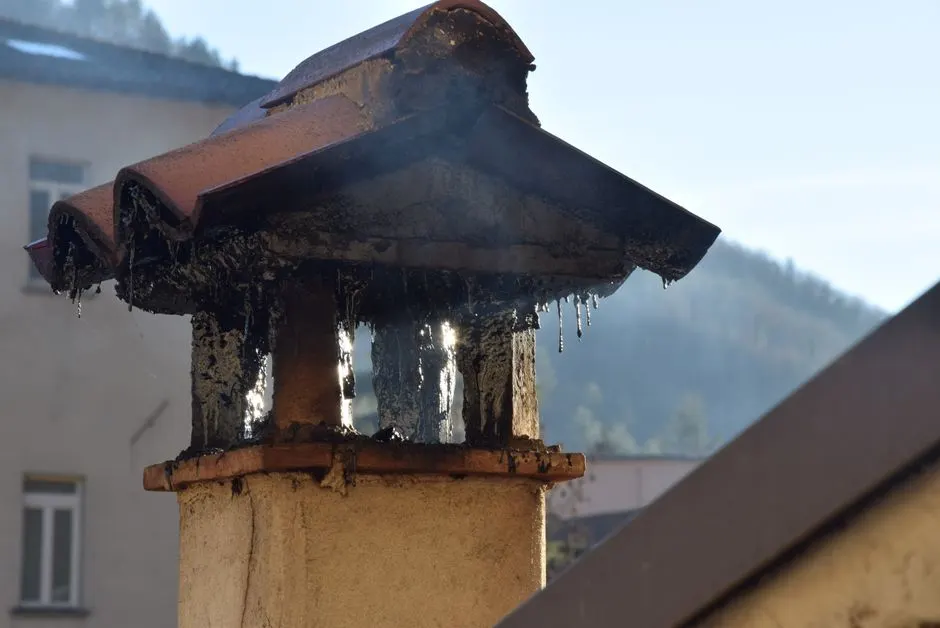
Preparing your fireplace for winter in Ewing means three things in order: sweep the flue, inspect the chimney from the firebox to the crown, and repair anything that would fail on the coldest night of the year. Do that in September or October and your first fire in November is a fifteen-second job - open the damper, light it, done.
Wait until the first cold snap and you are competing with every other homeowner in Mercer County for the same two-week booking window. We have watched that pattern repeat for years, and the homeowners who prep early are the ones who never call us in January.
Here is the full sequence, the Ewing-specific reasons it matters, and what it costs in 2026.
Why fall prep matters more in Ewing than most towns
Ewing sits in a pocket of central New Jersey where winter swings hard in both directions - a 20°F night in December, a 45°F thaw three days later, then a freeze again. That freeze-thaw cycle is the single biggest driver of chimney damage we see here.
Water gets into a hairline crack in the crown or the brickwork, freezes overnight, expands about 9 percent in volume, and pries the masonry open a little wider. Repeat that forty or fifty times between November and March and a crack you could barely see in October becomes a leak by February.
Two other local factors stack on top of it. First, the housing stock: a large share of Ewing homes were built between 1945 and 1975, which means original brick chimneys with original mortar joints that have already been through seventy or eighty winters. Second, storm exposure - the open ground around the Trenton-Mercer Airport corridor and the fields near the Delaware give wind a clean run at the north face of a chimney, and that face takes the weather.
If you want the short version of what a proper fall service looks like, our Chimney maintenance in Ewing, New Jersey page walks through the annual checklist we run on every home.
How do I prepare my fireplace for winter in Ewing?
You prepare a fireplace for winter by cleaning the flue first, then inspecting the chimney structure, then repairing defects, then testing the draft with a small break-in fire before the real heating season starts. That order matters - you cannot inspect a flue you have not cleaned, because creosote hides cracks.
Here is the sequence we run, in the order we run it:
- Sweep the flue. Remove soot and creosote from the firebox up through the flue and out the top. A wood-burning fireplace used regularly through a winter accumulates roughly one-eighth to one-quarter inch of creosote per season, and that glaze is what ignites in a chimney fire.
- Inspect the firebox and damper. Look for cracked firebrick, deteriorated mortar joints, and a damper that no longer seals flat. A damper that hangs open a half inch dumps heated air up the flue all winter.
- Inspect the flue liner. Clay tile liners crack; older homes sometimes have no liner at all. Any gap wider than the thickness of a dime is a path for heat and carbon monoxide into the framing.
- Inspect the crown, cap, and flashing. The crown is the concrete top of the chimney. Hairline cracks there are the number one entry point for water.
- Check the exterior masonry. Tap the brick, look at the mortar joints, and check the top three or four courses where freeze-thaw does the most damage.
- Test the draft. A small fire with the window cracked an inch tells you whether the flue is pulling. If smoke rolls into the room, stop and call us.
Most of that list you can eyeball yourself. The two items you cannot do safely are the flue sweep and the liner inspection - those need a ladder, a roof, and a camera.
When should you schedule a chimney sweep before winter in Ewing?
Schedule your chimney sweep between early September and mid-October if you burn wood regularly, and by the end of October at the latest if you are booking for the first time. That window gives you time to complete any repair the sweep uncovers before you actually need the fireplace.
There is a practical reason for the timing. From roughly November 1 through the end of January, every chimney company in the Trenton area is booked solid, and the calls that get priority are the ones with smoke in the living room. A homeowner who calls in October asking for a routine sweep gets a same-week appointment. The same homeowner calling in December with a cracked crown gets whatever slot opens up.
If your fireplace is a gas insert or a gas log set, the schedule is looser - those units produce far less creosote - but the inspection still matters. Gas appliances vent differently, and a blocked or disconnected flue on a gas fireplace is a carbon monoxide problem, not a smoke problem. You will not smell it.
For a full look at what a sweep involves and how long it takes, see our Chimney sweep in Ewing, New Jersey page.
What we check on every pre-winter chimney inspection
A pre-winter chimney inspection in Ewing covers the full run of the system, from the firebox floor to the top of the crown, plus the roof connection where the chimney meets the shingles. A sweep alone is not an inspection - the sweep cleans, the inspection diagnoses.
The firebox and damper
We look for cracked or spalled firebrick, mortar joints that have receded more than a quarter inch, and a damper plate that does not sit flush. A firebox in good shape holds heat where it belongs. A firebox with open joints lets heat into the surrounding framing, which is where house fires start.
The flue liner
We run a camera down the flue and look for cracked tiles, gaps at the joints, missing sections, and heavy glazed creosote. A clay liner that has cracked in two or three places is common in homes built before 1980. The fix is usually a stainless liner, and it is far cheaper to install in October than to deal with after a chimney fire.
The crown, cap, and flashing
The crown is the flat concrete surface on top. We check for cracks, spalling, and whether it overhangs the brick far enough to shed water clear of the walls. The cap keeps rain and animals out of the flue. The flashing is the metal seal where the chimney passes through the roof - when that fails, water shows up as a ceiling stain two floors below.
The exterior masonry
We tap the brick from the roofline down and check the mortar joints on all four faces, with extra attention to the north and west sides. Soft, crumbly mortar means repointing is due. Spalling brick faces mean water has been getting in for a while.
If the inspection turns up masonry issues, that is a separate scope of work, and our Chimney masonry repair in Ewing, New Jersey team handles everything from tuckpointing a few joints to rebuilding the top courses.
Repairs worth doing now instead of in January
The repairs that pay for themselves by preventing a mid-winter emergency are almost always the cheap ones done early. Here is what we prioritize when a pre-winter inspection turns up problems.
- Crown sealing or crown rebuild. A cracked crown is the most common water entry point on an Ewing chimney. Sealing a hairline crack is a same-day job; rebuilding a crown that has crumbled is a half-day job. Both are far cheaper than repairing water-damaged framing in February.
- Chimney cap replacement. A missing or rusted-out cap lets rain straight down the flue and gives squirrels and birds an open door. A stainless cap runs a fraction of what water damage costs.
- Flashing repair. If the metal where the chimney meets the roof has lifted or rusted through, every rainstorm is feeding water into your attic.
- Liner repair or relining. Cracked clay tiles get a stainless liner. This is the one repair you should never defer - a compromised liner is a carbon monoxide path into the house.
- Damper repair. A damper that will not close is a permanent hole in your heating bill. Fixing it is quick.
- Waterproofing. A breathable masonry sealer applied to the exterior brick keeps freeze-thaw from prying the joints open in the first place.
We handle all of those under one roof. If you want the full list of what we repair and how, our Chimney repair near me in Ewing, New Jersey page covers it.
What fireplace winter prep costs in Ewing in 2026
Typical 2026 pricing in the Ewing area runs from about $200 to $350 for a standard chimney sweep, $150 to $400 for a level-one inspection, and $1,800 to $4,500 for a full stainless liner installation on a single-flue chimney. Those are the ranges we quote most often.
Here is how the numbers break down by job:
- Chimney sweep (wood-burning, standard): $200–$350
- Level-one inspection (with sweep): $150–$400
- Crown sealing (minor cracks): $250–$600
- Crown rebuild: $600–$1,500
- Chimney cap, stainless, installed: $250–$650
- Flashing repair: $300–$900
- Tuckpointing (spot repairs): $500–$1,800
- Stainless liner installation: $1,800–$4,500
- Exterior waterproofing: $400–$1,200
Two things move a quote up or down: chimney height and access. A chimney that clears the roof by three feet is a straightforward job. A chimney on a steep pitch, or one with a steeple or a metal roof around it, adds labor. We give you a flat number before we start, and that number does not change because the job turned out to be a little harder than it looked from the ground.
Common mistakes we see every October
The mistakes that cost Ewing homeowners the most money are almost all about timing and shortcuts, not about the fireplace itself.
Burning before the sweep. The first fire of the season is the one that ignites accumulated creosote. If you have not swept since last winter, light a small test fire first, not a full load of oak.
Assuming a gas fireplace needs no service. Gas units still have a flue, a cap, and a liner, and a blocked gas flue is a carbon monoxide risk. We inspect gas fireplaces on the same schedule as wood ones.
Sealing the crown with the wrong product. Standard caulk cracks within one season on a chimney crown. The crown needs a flexible, masonry-rated sealant, and if the crown is already crumbling, it needs to be rebuilt, not patched.
Ignoring a ceiling stain. A brown ring on the ceiling near the chimney is a flashing or crown leak, not a roofing problem. Every week you wait, the water spreads into insulation and drywall.
Stacking green wood. Wood with more than 20 percent moisture content burns cool, produces three to four times the creosote, and sends most of its heat up the flue. Season your wood for at least six months, ideally a full year.
Closing the damper too early. A damper closed while embers are still hot pushes smoke and carbon monoxide into the room. Wait until the ashes are cold.
When to call a professional
Call a professional if you see cracked or missing flue tiles, a damper that will not seal, water staining anywhere near the chimney, spalling brick, or a crown with cracks you can catch a fingernail in. Those are all jobs that need a ladder, a camera, and the right materials.
Call immediately if you smell smoke in the house with the damper open, if the fireplace will not draft, if you have had a chimney fire, or if you see white chalky residue on the exterior brick. That last one is called efflorescence, and it means water is moving through the masonry right now.
Link Tough handles the whole sequence - sweep, inspection, and repair - on one visit when the work allows it. We work across Ewing and the surrounding Mercer County towns, and we will tell you plainly if the chimney is fine and you do not need us back until next fall.
Frequently Asked Questions
How do I prepare my fireplace for winter in Ewing?
Sweep the flue, inspect the firebox, liner, crown, cap, and flashing, repair anything cracked or loose, then test the draft with a small fire. Book the sweep in September or October. Most Ewing homeowners can complete the full sequence in one service visit.
When should I schedule chimney cleaning before winter in Ewing?
Book between early September and mid-October. That window lets you complete any repair the sweep uncovers before the heating season starts. From November through January, local chimney companies are booked solid and emergency calls take priority over routine sweeps.
What fireplace maintenance is needed for winter in Ewing, New Jersey?
An annual sweep, a level-one inspection, and repair of any cracked crown, damaged flashing, failed cap, or cracked flue tile. Wood-burning fireplaces need a sweep every year or every cord of wood burned, whichever comes first. Gas fireplaces need an annual inspection even though they produce little creosote.
Who can help prepare my chimney for winter in Ewing?
A licensed chimney sweep or chimney repair company that services Mercer County. Ask whether they run a camera down the flue, whether they inspect the crown and flashing, and whether they do the masonry repairs themselves or subcontract them out. We handle all three in-house.
How long does fireplace winter prep take?
A standard sweep and inspection takes 45 to 90 minutes. Crown sealing or cap replacement adds an hour. A full stainless liner installation is a half-day to a full day, depending on chimney height and roof access. We schedule most prep visits as a single appointment.
Get help with Chimney repair in Ewing
If your chimney has not been looked at since last winter, now is the window. We sweep, inspect, and repair across Ewing and the surrounding Mercer County towns, and we will tell you straight whether you need work or just a cleaning.
Call Link Tough at (844) 803-5147 to book your pre-winter chimney service.