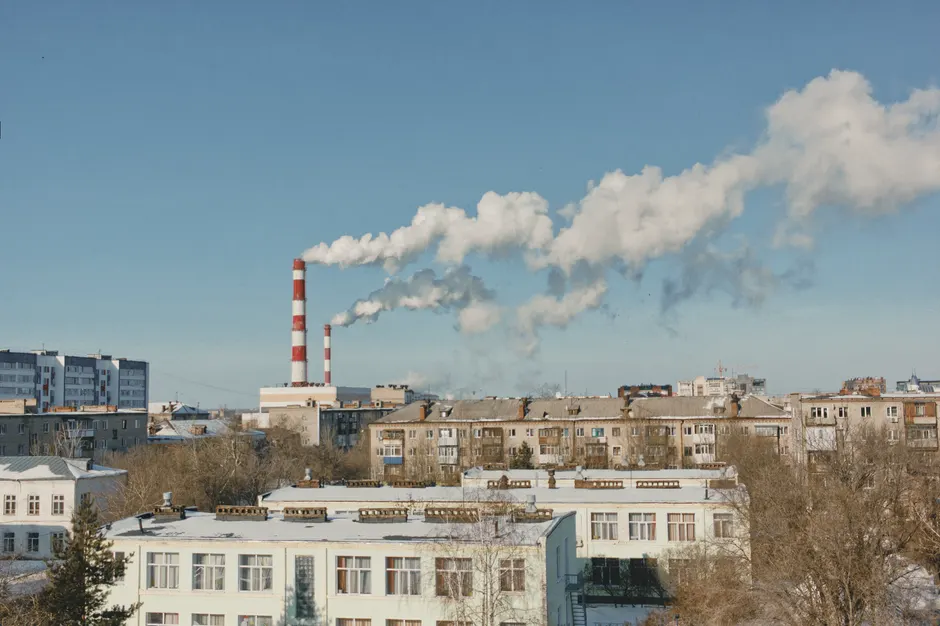
Your chimney is smoking because the fire is not getting enough upward draft to carry exhaust out of the house. In most Ewing homes we inspect, that comes down to one of five things: a cold flue, a creosote-clogged flue, a blocked chimney cap or flue tile, negative pressure inside the house, or a chimney that is simply too short for the home's roofline. The rest of this post walks through each cause, how to test for it in ten minutes, and what a real fix looks like.
Why is my chimney smoking in Ewing, New Jersey?
Why is my chimney smoking in Ewing New Jersey is a question we hear every fall, and the honest answer is that Ewing's housing stock makes it more likely than in newer towns. A large share of homes here were built between 1920 and 1970, with interior masonry chimneys that were sized for coal or oil furnaces, not modern wood stoves and high-efficiency inserts. When you change the appliance without resizing the flue, draft suffers.
Chimney smoking is a draft failure that pushes combustion byproducts back into the living space instead of up and out. It is not a cosmetic issue. Smoke carries carbon monoxide, and a chimney that puffs into the room is telling you the venting system is not doing its one job.
We see it most in two Ewing situations: homes along the older streets near the Delaware and Raritan Canal where tall trees and tight lots create wind eddies, and split-levels in the West Trenton area where the chimney sits on an exterior wall and stays cold all winter. Both patterns show up in the same symptom - smoke rolling out of the firebox the moment you light a fire.
The most common chimney smoking causes
Chimney smoking causes fall into two buckets: something is blocking the path, or something is killing the draft. Here are the ones we actually find on service calls, ranked by how often they show up.
1. A cold flue
A masonry chimney that has not been used since last spring is full of cold, dense air. That cold air plug sits in the flue and refuses to move until the fire warms it. On a 35°F morning in Ewing, that can take 10 to 20 minutes - and during those minutes, smoke spills into the room. This is the single most common cause of a chimney smoking when the fireplace is lit for the first time each season.
2. Creosote buildup
Creosote is the tar-like residue left behind by wood smoke. A flue with more than 1/8 inch of glazed creosote has lost enough cross-sectional area to choke its own draft. If you burn a lot of unseasoned wood, you can build that layer in a single heating season. It is also the fuel for chimney fires, which is why we treat it as urgent rather than cosmetic.
3. Blockages at the top
Bird nests, squirrel stashes, collapsed flue tiles, and leaves packed on top of a spark arrestor all block the flue. We pull squirrel nests out of Ewing chimneys every October and November. A blocked flue does not just smoke - it forces 100% of the exhaust back into the room.
4. Negative pressure inside the house
Modern homes are tight. Bathroom fans, kitchen range hoods, dryers, and second-floor HVAC returns all pull air out of the house. If the house is sealed tight enough, that air has to come back in somewhere - and a chimney is a convenient 8x8 inch hole in the roof. When the house wins that tug-of-war, the chimney reverses and pulls smoke into the room.
5. Chimney too short or wrong size
The rule of thumb is that a chimney should extend at least 3 feet above the roof penetration and 2 feet above anything within 10 feet. A chimney that fails that test sits in a turbulent pressure zone and will smoke in certain wind directions. We also see flues that are simply too large for the appliance - a 12x12 flue on a wood stove that wants an 8-inch liner will never draft properly.
How to fix a smoking chimney in Ewing
How to fix a smoking chimney in Ewing depends on which cause you have, but the sequence is always the same: rule out the cheap stuff first, then move to the structural fixes. Here is the order we work in.
- Warm the flue. Roll a piece of newspaper into a torch, light it, and hold it up near the open damper for 30 to 60 seconds before lighting the fire. If the smoke starts moving up, you had a cold flue - not a defect.
- Open a nearby window 1 to 2 inches. If the smoking stops, you have a pressure problem, not a chimney problem. That is a house-air issue, not a masonry issue.
- Check the cap and the top of the flue. From the ground with binoculars, look for a clogged spark arrestor, a bent cap, or a missing cap. If the cap is damaged, chimney cap repair Ewing is a same-day fix in most cases.
- Get the flue inspected and swept. A camera inspection tells us whether the flue is glazed, cracked, or blocked. If it is, we schedule a chimney cleaning service Ewing before you burn another fire.
- Address the liner. A cracked or missing liner is a draft killer and a fire risk. We install stainless liners sized to the appliance, which is the fix for most chronic draft problems in older Ewing homes.
If the chimney is failing structurally - spalling brick, missing mortar joints, a cracked crown - the fix is masonry work, not a sweep. That is where chimney masonry repair Ewing comes in, and it is often the difference between a chimney that drafts and one that keeps smoking for another decade.
Chimney draft problems in Ewing New Jersey
Chimney draft problems in Ewing New Jersey tend to show up in patterns tied to the neighborhood. On the older streets near the College of New Jersey, we see tall interior chimneys with undersized flues and original 1920s brick. In the ranch and split-level neighborhoods off Parkway Avenue, we see exterior chimneys that run cold and smoke on the first fire of every cold snap.
Draft is a balance of three things: flue temperature, flue size, and the pressure difference between the house and the outdoors. You can fix temperature by pre-warming the flue. You can fix size with a properly sized liner. You can fix pressure with a make-up air source or a top-sealing damper. What you cannot do is fix any of them by opening the damper wider and hoping.
One number worth knowing: a properly drafting chimney pulls about 10 to 20 pascals of negative pressure at the firebox. When we measure a smoking chimney, we usually find it sitting at zero or positive - meaning the house is winning.
Common mistakes we see when homeowners troubleshoot chimney smoke
Most of the damage we repair started as a homeowner trying to solve a chimney smoke problem the wrong way. These are the ones we see most often.
- Burning wet wood to "get it going." Unseasoned wood burns cool, creates more creosote, and makes draft worse. Firewood needs 6 to 12 months of seasoning - split, stacked, and covered - to hit 20% moisture or less.
- Cracking a window and calling it fixed. A cracked window masks a pressure problem. It does not fix the underlying cause, and it dumps heat out of the house all winter.
- Running a chimney that has never been inspected. If you bought the house in the last few years and have never had the flue looked at, you do not know what is in there. A $150 to $300 inspection in 2026 is cheaper than a chimney fire.
- Patching a cracked crown with caulk. Crown cracks let water in, and water freezes and spalls brick. Caulk buys you one season. Crown rebuilding is the real fix.
- Ignoring a smoking chimney because it "only does it sometimes." Intermittent smoke is still smoke. It usually means the problem is pressure-related, and pressure problems get worse as homes get tighter.
When to call a professional
Call a professional when smoke enters the room after you have warmed the flue and opened a window, when you smell creosote or see glaze on the flue walls, or when you see cracked or spalling brick on the chimney exterior. Those are not DIY fixes, and they are not things a sweep-and-go visit will solve.
Our team handles this every week across Ewing. We inspect the flue with a camera, measure draft at the firebox, and tell you exactly what is causing the smoke before we quote any work. If you want a chimney that drafts the way it is supposed to, start with a chimney inspection service Ewing - it is the cheapest way to find out what you are actually dealing with.
Frequently Asked Questions
Why is my chimney smoking in Ewing?
The most common reason is a cold flue - the chimney is full of cold air and has not warmed up enough to draft. In Ewing's older homes, creosote buildup and undersized flues for modern appliances run a close second. Warm the flue with a rolled newspaper torch for 30 to 60 seconds and see if the smoke reverses.
What causes a chimney to smoke in Ewing New Jersey?
Five causes cover about 95% of the calls we run: cold flue, creosote blockage, physical blockage at the cap or flue tile, negative pressure from exhaust fans and tight construction, and a chimney that is too short or too large for the appliance. Each one has a different fix, so diagnosis matters more than guessing.
How do I fix a smoking chimney in Ewing?
Start with the free tests: warm the flue, then crack a window. If neither helps, the flue needs to be inspected and likely swept. A camera inspection takes about 45 minutes and tells you whether you need cleaning, a new liner, or masonry work. Most fixes run $250 to $2,500 depending on scope.
Who can diagnose chimney smoking problems in Ewing?
A chimney sweep or chimney repair company with a camera and a draft gauge. Ask whether they measure draft at the firebox - if they only look from the ground, they are guessing. We run both tests on every smoking-chimney call in Ewing.
Get help with Chimney repair in Ewing
If your chimney is smoking and you have run through the free tests without luck, we can diagnose it. We serve Ewing and the surrounding Mercer County area, and we carry the cameras, draft gauges, and liners to fix most smoking chimneys in a single visit.
Call Link Tough at (844) 803-5147 to schedule a chimney inspection or repair. If you would rather start with the basics, our Chimney repair team can walk you through what to check before we arrive.